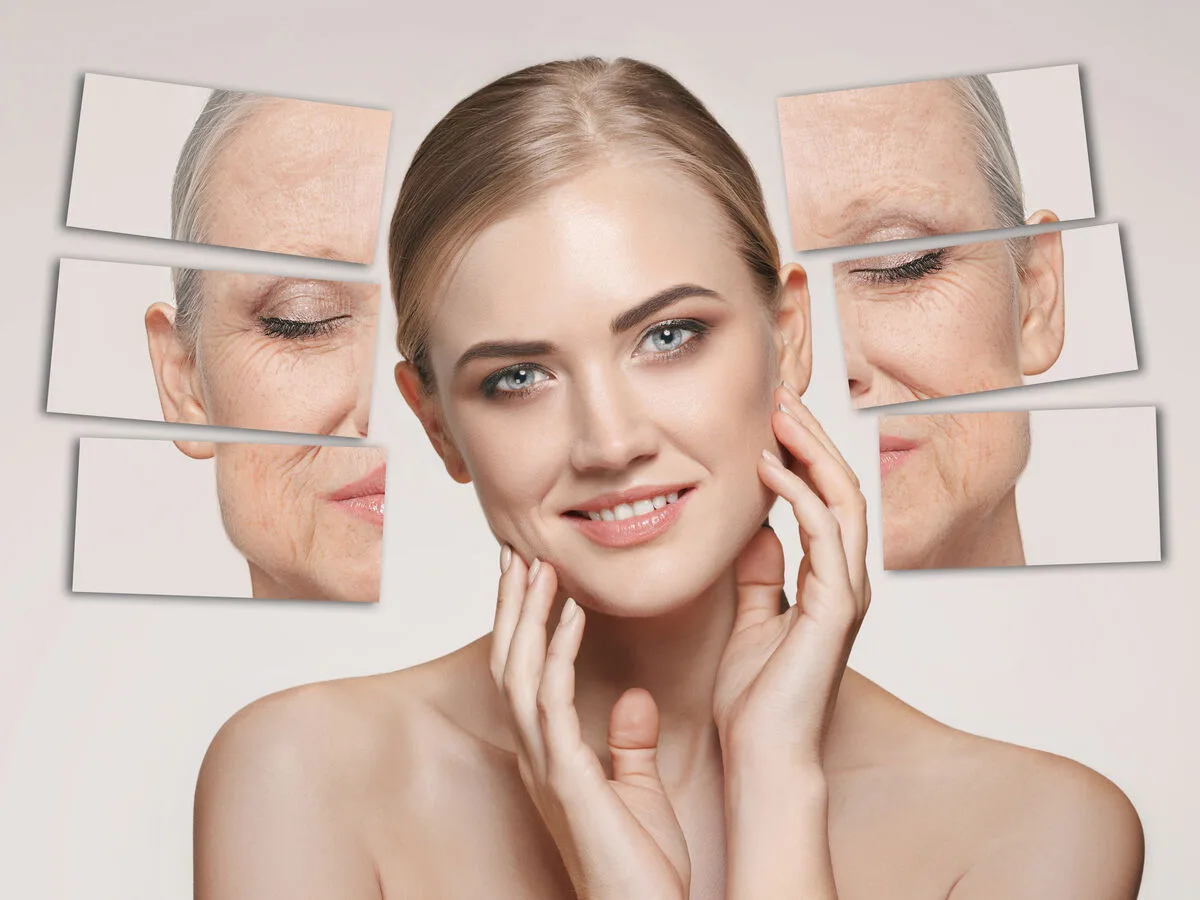
What Happens in Our Skin That Makes It Age
Skin aging is something we observe on the surface — the gradual accumulation of lines, shifts in tone and texture, loss of firmness. But these visible changes are downstream effects of biological processes occurring in the skin's deeper layers over years and decades. Understanding what actually happens in aging skin explains why different interventions target different mechanisms — and helps set realistic expectations about what each can accomplish.
Skin aging operates along two main pathways: intrinsic aging (driven by internal biology, largely time and genetics) and extrinsic aging (driven by the external environment, primarily ultraviolet radiation but also pollution, smoking, and nutrition). These two pathways interact and compound each other — which is why the same chronological age can look dramatically different on different people.
Intrinsic Aging: The Biological Clock
Intrinsic aging proceeds regardless of sun exposure or lifestyle — it is the built-in biological aging of the skin's cellular machinery.
Collagen production slows. Fibroblasts — the cells in the dermis responsible for producing collagen and elastin — become less active with age. Collagen synthesis measurably declines, with estimates in the research literature suggesting roughly a 1% reduction in dermal collagen content per year in adult skin. The structural matrix of the dermis becomes thinner and less organized over time.
Existing collagen degrades. Beyond declining production, the collagen that does exist becomes increasingly cross-linked and less functional. Matrix metalloproteinases (MMPs) — enzymes that break down collagen — become more active relative to the collagen-preserving inhibitors that counterbalance them. The net effect is a thinner dermis with reduced tensile strength.
Cell turnover slows. The skin renews itself through a process of epidermal cell turnover — new keratinocytes forming at the basal layer, migrating toward the surface, and eventually shedding. In young skin this cycle takes roughly 28 days. In older skin it slows substantially — estimates extend to 40–60 days or more. Slower turnover means surface skin cells linger longer, contributing to a duller, less luminous complexion and slower wound healing.
Moisture retention decreases. Ceramides and natural moisturizing factors (NMFs) in the stratum corneum — the skin's outermost layer — decline with age, reducing the skin's ability to retain water. The result is increased transepidermal water loss and skin that appears and feels drier and more fragile.
Fat redistributes. Subcutaneous fat — the layer beneath the dermis — atrophies in some areas (under the eyes, temples, cheeks) and shifts in others. This volume loss contributes significantly to the structural changes of facial aging: hollowing of the under-eye area, flattening of cheeks, loss of the clean jawline definition of youth.
Bone remodels. Facial bone remodeling — less discussed but well-documented in anatomical research — contributes to the changing structure of the aging face. The orbital rim widens, the maxilla and mandible recede, and these skeletal changes affect the soft tissue drape above them in ways that cannot be addressed by topical products.
Extrinsic Aging: Environmental Damage
While intrinsic aging is mostly outside our control, extrinsic aging is substantially modifiable.
Ultraviolet radiation is the dominant external aging factor. UVB radiation damages DNA in skin cells directly, driving mutations that accumulate over time. UVA radiation penetrates more deeply — reaching the dermis — and generates reactive oxygen species that damage collagen and elastin. The clinical term for UV-driven aging is photoaging, and dermatology researchers estimate that UV exposure accounts for the majority of visible skin aging in most people — more than intrinsic biological aging.
The evidence for sun protection as the most impactful topical anti-aging intervention is among the most robust in dermatology. Longitudinal cohort studies have found measurably less skin aging in people with consistent sun protection habits compared to those without, even at the same chronological age and with similar genetics.
Oxidative stress from multiple sources — air pollution, cigarette smoke, ozone — depletes antioxidant defenses in the skin and accelerates collagen degradation. Urban pollution is an increasingly studied independent contributor to skin aging, particularly in populations with high air pollution exposure.
Smoking is a well-documented accelerant of skin aging — associated with increased wrinkle depth, reduced skin elasticity, and degraded collagen, through mechanisms involving oxidative stress, reduced blood flow, and direct nicotine effects on fibroblasts.
Glycation — the bonding of sugars to proteins like collagen — occurs more rapidly with chronically elevated blood sugar and contributes to stiffening and cross-linking of collagen fibers, reducing skin elasticity. This connects diet and metabolic health to skin aging in a mechanistic way.
What Clinical Intervention Can Address
Understanding these mechanisms helps clarify why different treatments target different problems:
- Microneedling, plasma fibroblast, and laser approaches create controlled micro-injury that activates the body's wound healing response — stimulating fibroblasts to produce new collagen in an attempt to rebuild. The goal is to reactivate a process that has slowed.
- LED photobiomodulation targets mitochondrial efficiency in fibroblasts — aiming to support the cell's energy capacity for protein synthesis without triggering a wound response.
- Topical retinoids — the best-studied of all topical anti-aging actives — accelerate cell turnover and have been shown in controlled trials to stimulate collagen synthesis and reduce photodamage markers at the histological level.
- Sunscreen and UV protection — still the single most impactful daily intervention — prevents ongoing damage to the very collagen and DNA that regenerative treatments are working to restore.
Skin aging is layered and cumulative. The most effective approaches address it the same way: consistently, across multiple mechanisms, over time.
This article is for educational purposes. For assessment of your individual skin aging concerns and appropriate treatment options, a clinical consultation provides more personalized guidance.