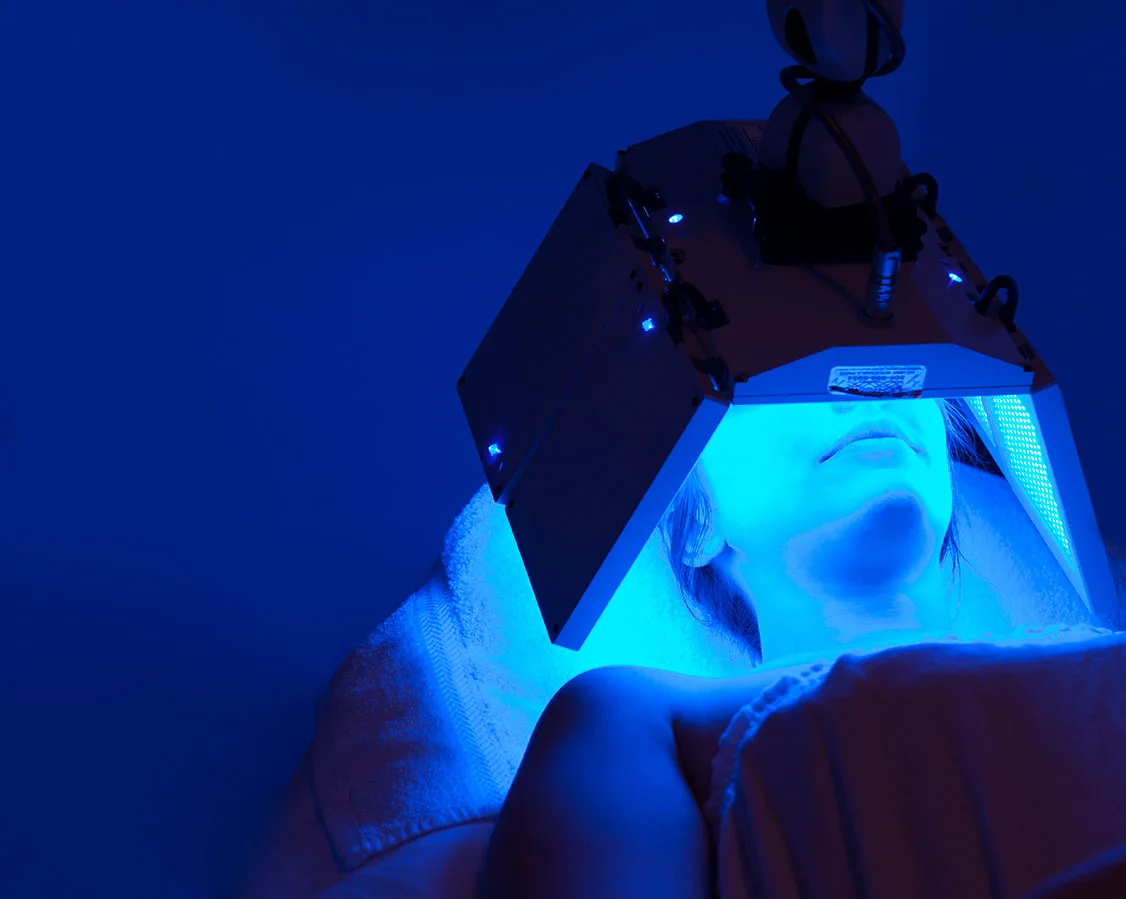
Red and Near-Infrared LED Light Therapy for Skin: What the Research Actually Says
Photobiomodulation is one of the most research-backed technologies in aesthetics. Here's the mechanism, the evidence, and what it realistically does.
If you've encountered LED light therapy in the wild — a glowing face mask on social media, a consumer panel on an influencer's desk, a new app claiming to "rejuvenate your skin in 10 minutes" — you've probably wondered: is any of this real?
The answer, with appropriate nuance, is yes. LED photobiomodulation is one of the most thoroughly researched therapeutic applications in dermatology and aesthetic medicine. But the research applies to specific wavelengths, specific irradiance levels, and specific exposure durations — not to every glowing consumer device on the market.
Here's an honest look at the science.
What Photobiomodulation Actually Is
Photobiomodulation (PBM) is the use of low-level light — in specific wavelengths — to initiate biological responses in tissue. It is not heat therapy. It does not burn or ablate. It works by a fundamentally different mechanism: light at particular wavelengths is absorbed by chromophores in cells, triggering photochemical reactions that influence cellular behavior.
The primary cellular target in skin is cytochrome c oxidase — an enzyme in the mitochondrial respiratory chain. When absorbed by this enzyme, red (approximately 630–660 nm) and near-infrared (approximately 810–850 nm) wavelengths increase mitochondrial ATP production — effectively giving skin cells more energy to carry out repair, synthesize proteins, and execute biological functions.
This is not a hypothesis. It has been demonstrated in hundreds of peer-reviewed studies across multiple tissue types.
What Red and Near-Infrared Light Do in Skin
The downstream effects of increased mitochondrial ATP in skin cells include:
Collagen and elastin synthesis. Fibroblasts — the cells responsible for producing collagen — respond to photobiomodulation by increasing their metabolic activity and collagen output. Multiple randomized controlled trials have demonstrated measurable increases in collagen density following consistent LED photobiomodulation treatment.
Accelerated wound healing. PBM is used clinically to accelerate tissue repair following surgery, laser treatments, and injury. In aesthetic contexts, this means skin recovers faster from more intensive treatments when LED is incorporated into the protocol.
Inflammation reduction. Near-infrared wavelengths penetrate to the dermal and subdermal level and have anti-inflammatory effects — reducing the chronic low-grade inflammaging that drives structural skin aging. This is particularly relevant for post-menopausal skin, sensitive skin types, and clients with active inflammatory conditions.
Improved microcirculation. PBM supports vascular function in the skin, improving blood flow and nutrient delivery to the dermis — contributing to the improved radiance and tone clients typically notice after a series of treatments.
What Consumer Devices Miss
The gap between clinical and consumer-grade LED therapy is significant — and rarely disclosed by the companies selling consumer devices.
Clinical systems like the LIGHTWAVE Elite LED® deliver precisely calibrated wavelengths at therapeutic irradiance levels (measured in mW/cm²), for evidence-validated exposure durations. The dose matters enormously in photobiomodulation — too little light produces no response; too much can be counterproductive (the Arndt-Schulz law).
Most consumer LED masks and panels operate at irradiance levels well below the therapeutic threshold established in the literature. They may not be completely ineffective — very low doses can produce some benefit — but they cannot replicate the outcomes achievable with clinical systems operated correctly.
What LED Light Therapy Realistically Achieves
Across well-designed clinical studies, consistent LED photobiomodulation treatment has demonstrated:
- Measurable reduction in fine line and wrinkle depth over treatment series (typically 8–12 sessions)
- Improved skin tone, radiance, and surface texture
- Reduction in redness and inflammatory skin conditions
- Accelerated recovery from more intensive aesthetic treatments
- Progressive, cumulative improvement that builds across sessions and is maintained with regular treatment
What it does not do is replicate the outcomes of structural tightening or resurfacing procedures. LED works best as a foundation — supporting the cellular environment in which other structural treatments produce more lasting results.
How We Use It at South County Microspa
The LIGHTWAVE Elite LED® is integrated into virtually every protocol we design — not as a standalone treatment, but as the biological foundation that makes other interventions more effective and lasting.
When combined with plasma remodeling, microcurrent, or Dermatude Meta-Therapy, LED supports recovery, amplifies collagen synthesis, and reduces the inflammatory load that would otherwise slow structural progress. This is the evidence-based rationale for combination protocols rather than single-technology treatment plans.
If you're curious about whether LED therapy is right for your skin — or how it fits into a broader anti-aging protocol — your consultation is the right place to start that conversation.