
Inflammation, Free Radicals & the Science of Aging Skin
What chronic inflammation is actually doing to your cells — and what you can do about it.
In the body's ongoing effort to protect and repair itself, inflammation plays a central role. When you sprain an ankle or fight off an infection, the redness, warmth, and swelling you experience are signs that your immune system is doing exactly what it should. That acute inflammatory response is life-sustaining — delivering white blood cells, nutrients, and healing signals to where they're needed most.
But when inflammation becomes chronic — a persistent, low-grade simmer rather than a targeted response — it transitions from protector to accelerator of damage. Researchers have given this state a name: inflamm-aging. It is now understood to be one of the central drivers of how we age: in our cells, in our organs, and visibly in our skin.
What Chronic Inflammation Actually Does to Your Cells
Sustained inflammation keeps the immune system in a state of partial activation. The signaling molecules involved — cytokines, interleukins, and tumor necrosis factor — are powerful when deployed briefly and precisely. Over years, however, their continued presence generates a damaging ripple effect through the body's tissues.
At the cellular level, this matters for several reasons. Inflammatory signaling promotes the production of reactive oxygen species (ROS) — molecules with unpaired electrons that are chemically unstable and highly reactive. When ROS accumulate faster than the body can neutralize them, the resulting condition is called oxidative stress.
Oxidative stress causes measurable damage to:
- DNA strands, potentially accelerating mutation accumulation
- Cell membranes, impairing how nutrients and waste move in and out
- Mitochondria, reducing the cell's ability to produce energy and repair itself
- Structural proteins — particularly collagen and elastin — that keep skin firm and resilient
This is not an abstract process. It is why chronically inflamed skin tends to appear duller, thinner, and less responsive — and why systemic inflammation is linked not just to skin aging, but to cardiovascular disease, cognitive decline, metabolic dysfunction, and cancer.
Free Radicals: Where Inflammation and Aging Converge
Free radicals — the reactive oxygen species generated during oxidative stress — are produced naturally as a byproduct of normal metabolism. The body has sophisticated antioxidant defenses to manage them, including enzymes like superoxide dismutase and catalase, as well as compounds derived from the diet.
The problem arises when this balance tips. Chronic inflammation, poor diet, excess sun exposure, smoking, poor sleep, and environmental toxins all increase free radical production beyond what internal defenses can handle. The result is cumulative cellular wear that compounds over time.
In skin, free radical damage activates enzymes called matrix metalloproteinases (MMPs), which break down collagen and elastin. This is the same mechanism triggered by UV radiation — which is one reason chronic inflammation and sun damage produce such similar visible effects: fine lines, laxity, uneven texture, and loss of firmness.
AGEs: When Sugar Accelerates Structural Damage
A third mechanism deserves attention alongside inflammation and oxidative stress: the formation of Advanced Glycation End products, or AGEs.
AGEs form when sugar molecules in the bloodstream attach to proteins or fats through a process called glycation. This is not exclusive to people with diabetes — it occurs in everyone, but accumulates more rapidly when blood sugar is persistently elevated. The targets include collagen and elastin in the skin, where AGEs create abnormal cross-links between protein fibers. The result is tissue that becomes stiffer, less pliable, and less capable of self-repair.
Glycation also impairs the skin's ability to hold water, contributes to yellowing and dullness, and reduces the activity of fibroblasts — the cells responsible for producing new collagen. The cumulative effect of AGEs on skin appearance can be significant, particularly from the fourth decade onward.
Dietary choices meaningfully influence AGE accumulation. Foods cooked at high dry heat — particularly charred or ultra-processed items — contain preformed dietary AGEs that add to the body's burden. A diet lower in added sugars and refined carbohydrates, and higher in antioxidant-rich whole foods, measurably slows this process.
The Role of Antioxidants
Antioxidants are molecules capable of donating an electron to a free radical without becoming unstable themselves — effectively neutralizing the threat before it damages cellular structures. The body produces some antioxidants endogenously, but diet remains the primary source of the broader array of protective compounds.
Key antioxidants relevant to skin aging and inflamm-aging include:
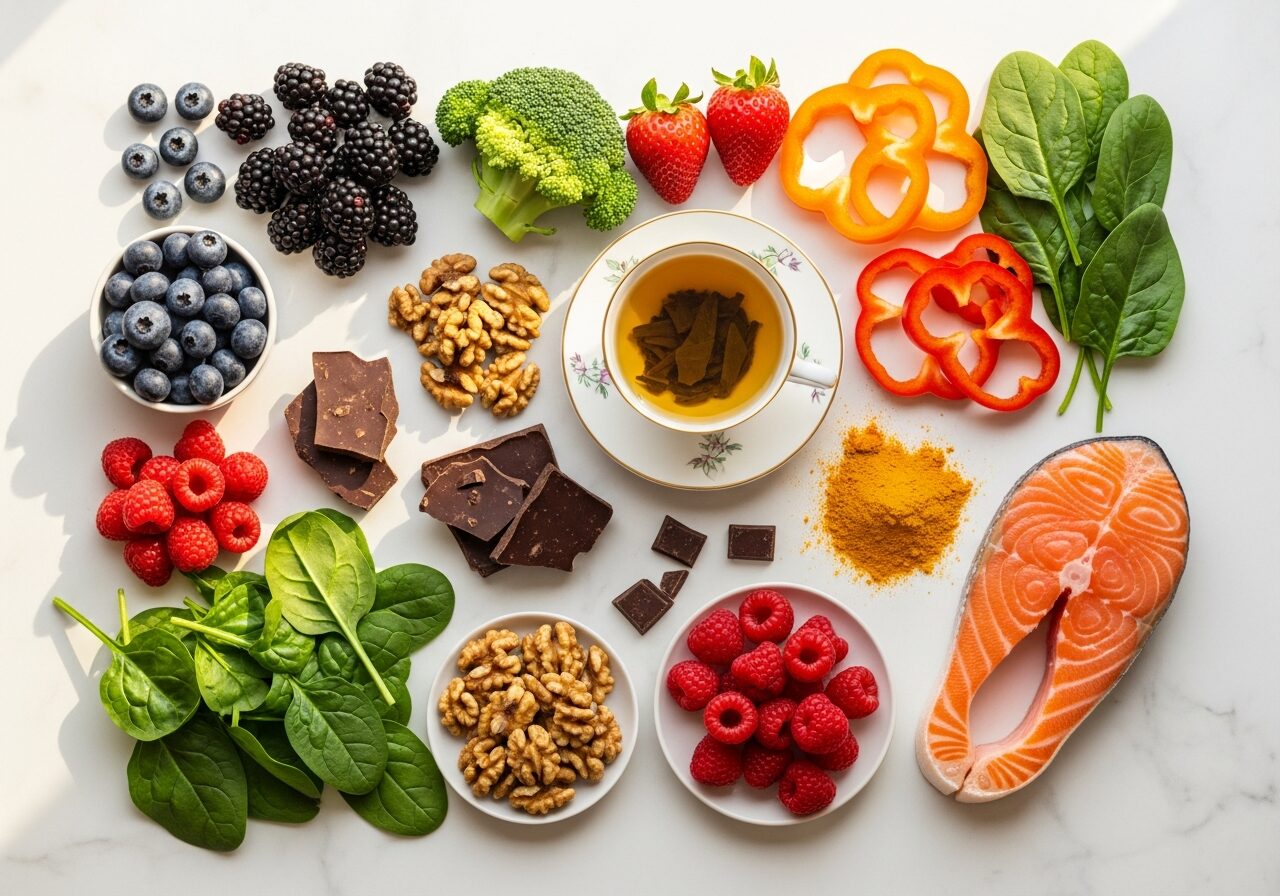
- Vitamin C — essential for collagen synthesis and a potent free radical scavenger; found in citrus, bell peppers, and leafy greens
- Vitamin E — fat-soluble antioxidant that protects cell membranes; found in nuts, seeds, and olive oil
- Carotenoids (including beta-carotene, lycopene, and lutein) — concentrated in orange, red, and yellow produce; support skin photoprotection and reduce inflammatory signaling
- Polyphenols — a broad class of plant compounds found in berries, green tea, dark chocolate, and turmeric; many have both antioxidant and direct anti-inflammatory properties
- Omega-3 fatty acids (EPA and DHA from fatty fish and marine oils) — reduce the production of pro-inflammatory eicosanoids and support healthier cell membrane composition throughout the body
Antioxidants do not stop aging, but they meaningfully slow the rate at which oxidative damage accumulates. The evidence for dietary antioxidant intake and skin aging is now substantial enough that most longevity-focused dermatologists and practitioners treat nutrition as a foundational part of any skin health protocol.
How Spa Treatments Can Support the Anti-Inflammatory Response
Understanding the biology of inflamm-aging points directly to what professional treatments can — and cannot — accomplish. At South County Microspa, we design protocols that work with these mechanisms rather than around them.
Antioxidant Facials
Topically applied antioxidants penetrate the outer layers of the skin and provide localized protection that oral sources cannot fully replicate. Professional antioxidant treatments deliver concentrated vitamin C serums, niacinamide, resveratrol, and botanical polyphenols to the dermis under conditions optimized for absorption — including exfoliated, clean skin and, where appropriate, enhanced delivery technology.
"The goal of an antioxidant facial is not simply to nourish the surface. It is to reduce the oxidative burden on fibroblasts, support collagen integrity, and calm the inflammatory signaling that accelerates visible aging."
LED Photobiomodulation Therapy
LIGHTWAVE® LED therapy — particularly red and near-infrared wavelengths — has well-documented anti-inflammatory effects. At the mitochondrial level, specific wavelengths stimulate cytochrome c oxidase, increasing ATP production and reducing the mitochondrial stress that contributes to cellular aging. Clinically, LED therapy reduces inflammatory cytokine expression, accelerates tissue repair, and supports the collagen remodeling cycle without generating additional oxidative stress.
For clients managing chronic skin inflammation — including rosacea, post-procedural redness, or environmentally compromised skin — LED remains one of the most evidence-supported regenerative tools available.
Lymphatic Drainage Massage
Chronic inflammation is partly sustained by impaired clearance of inflammatory byproducts. Lymphatic massage supports the drainage of interstitial fluid, reduces localized swelling, and helps move immune complexes and metabolic waste out of tissues. Regular lymphatic work can reduce the visible puffiness and congestion associated with inflamm-aging, particularly in the periorbital and mid-facial regions.
Regenerative Microneedling
Controlled microtrauma from professional microneedling creates a brief, precisely targeted acute inflammatory response — one that resolves cleanly and triggers the collagen remodeling cascade without the oxidative collateral damage of uncontrolled chronic inflammation. When combined with growth factor serums or peptide infusions, regenerative microneedling supports dermal matrix rebuilding in a way that addresses some of the structural losses caused by long-term inflamm-aging.
Practical Steps That Move the Needle
The research on chronic inflammation, oxidative stress, and AGEs converges on a shared set of evidence-supported habits. None of these are novel, but collectively they exert a meaningful effect on the rate of biological aging.
Reduce chronic inflammation:
- Prioritize an anti-inflammatory diet rich in whole vegetables, fatty fish, olive oil, and fiber
- Minimize added sugars, refined carbohydrates, and ultra-processed foods
- Manage persistent stress through sleep, movement, and restorative practices
- Avoid smoking and limit alcohol, both of which generate significant oxidative stress
Support antioxidant defenses:
- Eat a wide variety of colorful produce daily — diversity of plant foods drives diversity of protective compounds
- Include omega-3 sources (salmon, sardines, mackerel, flaxseeds, walnuts) regularly
- Consider targeted supplementation based on testing, not guessing — vitamin D status, omega-3 index, and inflammatory markers like high-sensitivity CRP provide actionable data
Slow AGE accumulation:
- Favor lower-temperature cooking methods — steaming, poaching, and sautéing over high-heat charring
- Maintain stable blood sugar through meal composition and consistent movement
- Prioritize quality sleep — nocturnal cellular repair processes, including autophagy, directly counteract AGE accumulation and oxidative damage
The Bigger Picture
Aging cannot be stopped, but the rate at which its effects accumulate is genuinely modifiable. The science is clear that chronic inflammation, oxidative stress, and glycation are not inevitable — they are, in large part, responses to lifestyle, environment, and how well we support the body's existing repair systems.
Visible skin aging is often the most accessible window into what is happening systemically. When the skin looks inflamed, dull, or structurally compromised, it is frequently reflecting a broader biological environment that has been operating under elevated oxidative and inflammatory burden for years.
The most effective approaches — whether dietary, behavioral, or therapeutic — work by supporting the same underlying biology: reducing the inflammatory load, neutralizing free radicals before they cause cascading damage, and preserving the structural proteins that give both skin and connective tissue their resilience.
Educational note. This article is intended for general educational purposes and does not replace individualized medical or skincare advice. Please consult a qualified healthcare provider regarding any specific health concerns, and discuss personalized skin treatment protocols with a trained practitioner.