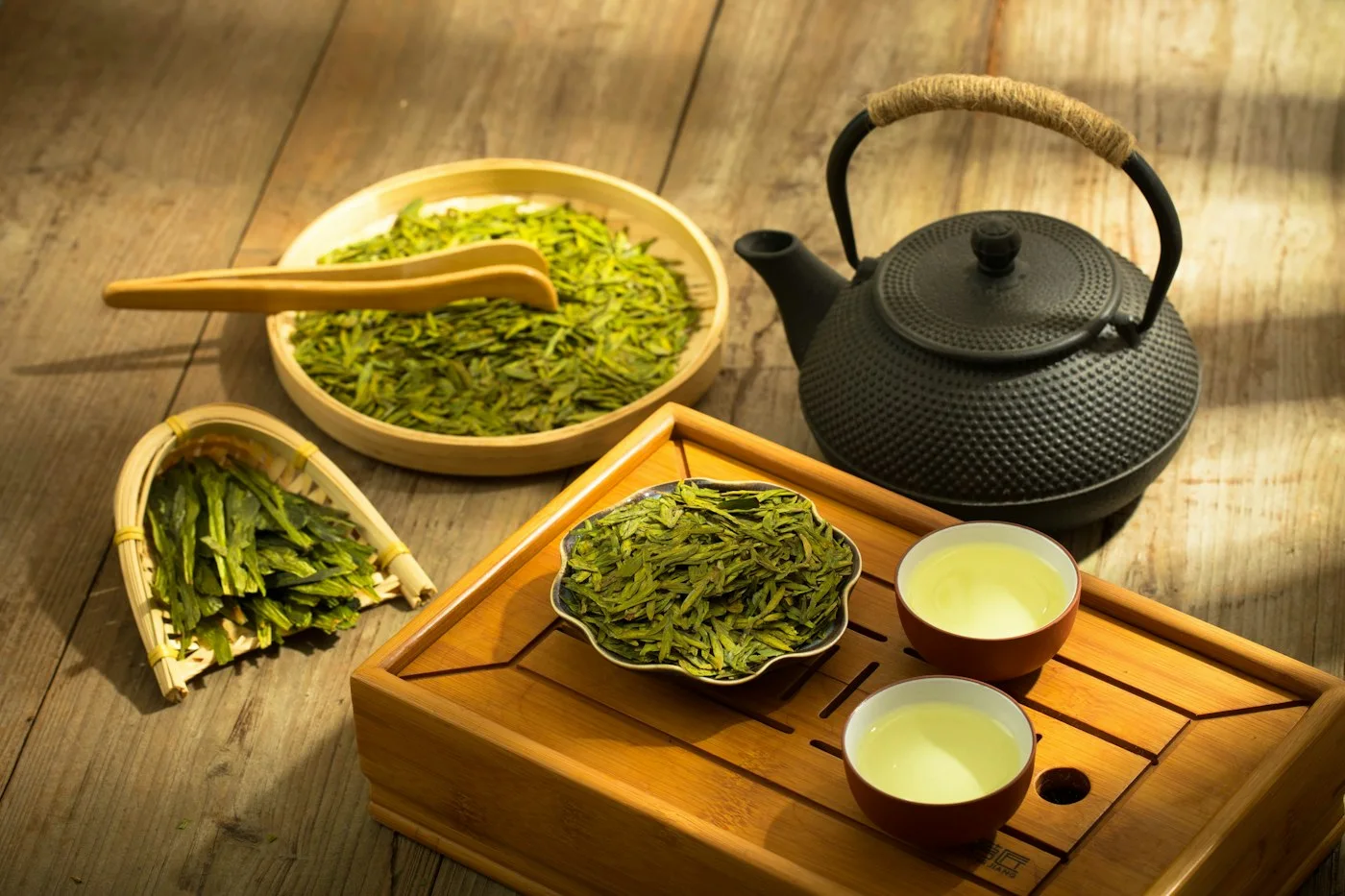
Green Tea, Histamine, and the Problem With Health Misinformation: What Does the Research Actually Say?
Why I continue to recommend green tea—and why we should all learn to question the health information we read online.
I routinely recommend green tea for its variety of potential health benefits. It is rich in polyphenols, particularly a group of compounds called catechins, which have been extensively studied for their antioxidant, anti-inflammatory, and metabolic effects.
There is research suggesting that green tea may support fat oxidation, improve certain cardiovascular risk factors, and potentially contribute to healthier body composition. Researchers have also investigated whether its catechins can help preserve muscle strength and function as we age.
Muscle preservation is particularly important to me. As we get older, maintaining skeletal muscle is essential for metabolic health, insulin sensitivity, physical independence, and healthy aging. Losing weight without preserving muscle is not necessarily an improvement in health.
I am interested in interventions that help people reduce excess body fat while protecting the muscle they need to remain strong and metabolically healthy.
Green tea is not a miracle solution, and the evidence for some of these benefits is stronger than for others. But it is an inexpensive, widely available beverage with several promising properties supported by scientific research.
That is why I was particularly interested when a patient recently sent me an article suggesting that green tea could be problematic because of its histamine-related effects.
The article, Green Tea and Histamine – Tolerance Guide, published on the artgerecht website, claims that green tea acts as a histamine liberator, potentially causing the body to release histamine and triggering symptoms in people with histamine intolerance.
At first glance, the article appears credible. It uses scientific terminology, explains biological mechanisms, describes symptoms, and includes references to published research.
But there is an important question we should ask whenever we encounter an article like this:
Does the research actually support what the author is telling us?
In this particular case, when I examined the scientific literature, I found something quite different.
And that is what I want to discuss—not just green tea, but how easily health information can become misleading when scientific findings are taken out of context.
First, What Does the Research Say About Green Tea’s Health Benefits?
Green tea comes from the plant Camellia sinensis. Unlike black tea, it undergoes relatively little oxidation during processing, helping preserve many of its naturally occurring catechins.
One of the most studied is epigallocatechin-3-gallate, commonly called EGCG.
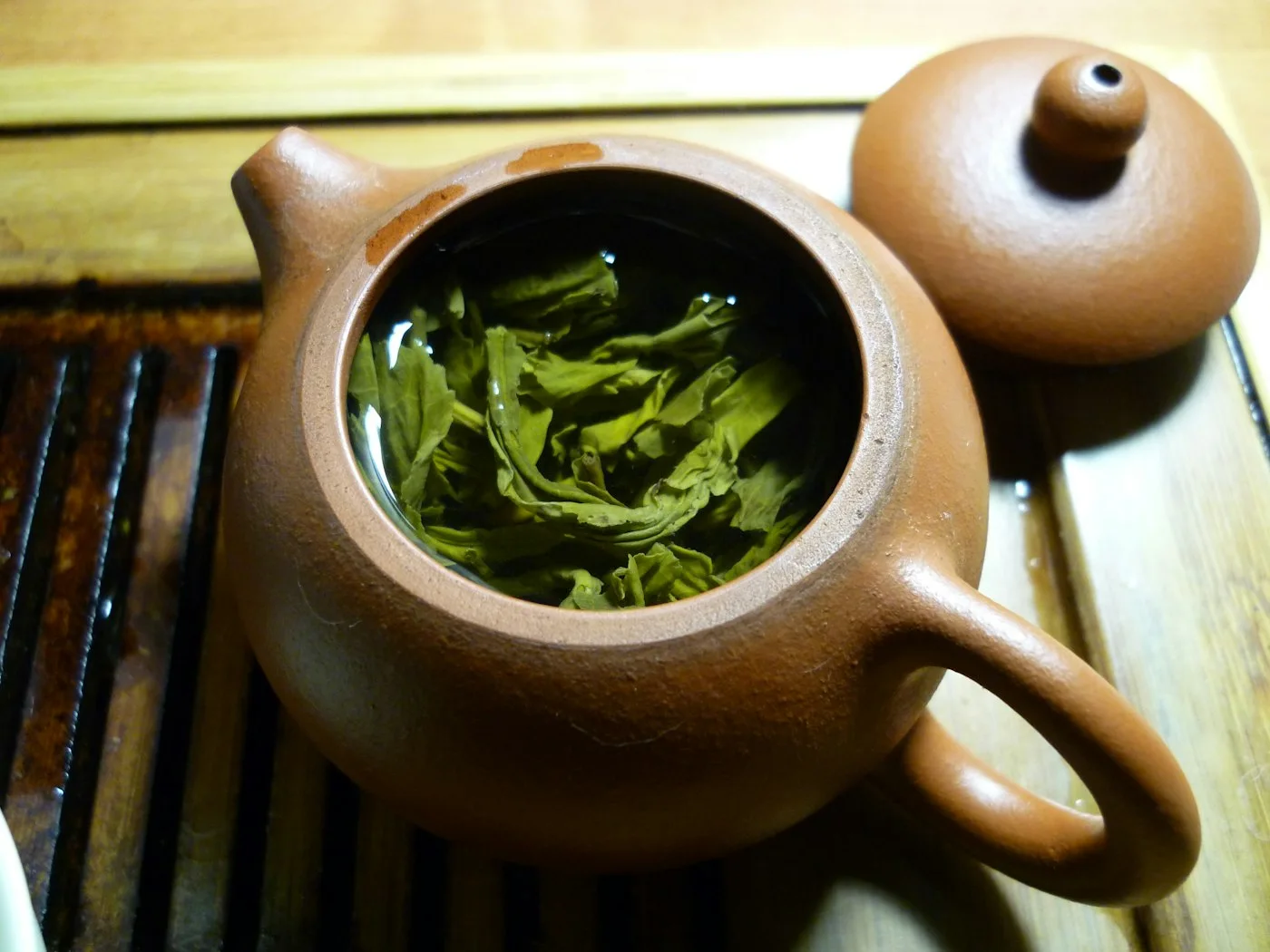
Green Tea and Fat Metabolism
Green tea catechins have been investigated for their effects on energy metabolism and fat oxidation.
Fat oxidation refers to the process by which the body uses fat for energy. It is not the same thing as losing body fat, but it is one component of metabolic regulation.
A 2025 systematic review and meta-analysis of randomized controlled trials found that green tea supplementation was associated with modest reductions in body weight, waist circumference, and body fat percentage.
The average reduction in body fat percentage was approximately 0.65 percentage points.
That is not a dramatic effect, but it is a measurable one.
A separate 2024 meta-analysis involving 59 randomized trials and 3,802 participants also reported reductions in body weight and body fat percentage, along with improvements in certain markers of oxidative stress.
Importantly, these studies largely evaluated green tea supplements or extracts, rather than ordinary cups of brewed green tea. We cannot assume that drinking tea produces identical effects.
My interpretation: Green tea may offer modest support for metabolic health and body composition, but it should complement—not replace—adequate nutrition, resistance exercise, and other established strategies for reducing excess body fat.
Green Tea and Muscle Preservation
There is growing interest in whether green tea catechins can help protect skeletal muscle against age-related decline.
This is particularly relevant because muscle loss can occur during aging, illness, inactivity, and intentional weight reduction.
In a 2026 randomized controlled trial involving 78 older adults, researchers evaluated catechin-enriched green tea combined with exercise over 24 weeks.
Participants receiving catechins showed a favorable difference in knee-extension strength compared with the exercise-and-placebo group.
However, the researchers did not find a statistically significant difference in muscle mass between groups.
That distinction matters.
Improved muscle strength is not the same as demonstrated preservation of muscle mass.
The research is promising, but we do not yet have sufficient human evidence to claim that ordinary green tea reliably prevents muscle loss.
I still consider this an important area of investigation, particularly for older adults and people working to reduce body fat without sacrificing lean tissue.
Green Tea and Cardiovascular Health
The evidence for certain cardiovascular benefits is more established.
A 2020 meta-analysis of 31 randomized controlled trials involving 3,321 participants found that green tea consumption reduced LDL cholesterol by an average of approximately 4.6 mg/dL and total cholesterol by approximately 4.7 mg/dL.
Another systematic review of 55 randomized trials reported modest improvements in LDL cholesterol, fasting blood glucose, HbA1c, and diastolic blood pressure.
These are relatively small changes, and green tea is not a substitute for indicated medical treatment. Nevertheless, the findings suggest potentially useful effects on several markers of cardiometabolic health.
Green Tea and Oxidative Stress
Green tea is particularly well known for its polyphenol content.
These compounds have antioxidant activity in laboratory experiments and may influence cellular signaling pathways involved in inflammation and oxidative stress.
Some human trials also report improvements in oxidative stress biomarkers.
However, an important scientific distinction is that a compound’s antioxidant activity in a laboratory does not automatically translate into a proven reduction in disease risk in humans.
That is why I prefer to look for controlled human studies rather than relying solely on biochemical theories.
Now, What About Histamine?
Histamine is a naturally occurring signaling molecule involved in immune responses, stomach acid production, and nervous system function.
It is stored in cells such as mast cells and can be released during allergic and inflammatory responses.
Histamine can also enter the body through certain foods, particularly foods in which microbial activity or storage conditions lead to the accumulation of biogenic amines.
The body uses several pathways to regulate histamine. Diamine oxidase, or DAO, is particularly important for breaking down extracellular histamine, including some histamine encountered in the digestive tract.
Some individuals report symptoms they associate with dietary histamine, including flushing, headaches, digestive discomfort, and nasal symptoms.
These symptoms are real and deserve appropriate evaluation.
However, diagnosing histamine intolerance is more complicated than many online articles suggest. There is no universally accepted, reliable single diagnostic test, and symptoms can overlap with numerous other medical conditions.
This uncertainty is important when evaluating claims about which foods people should avoid.
Is Green Tea Actually High in Histamine?
This is where we should distinguish between two completely different questions.
Does green tea contain histamine?
And:
Does green tea cause the body to release histamine?
These are not the same thing.
A 2016 study published in the Journal of Analytical Methods in Chemistry measured biogenic amines, including histamine, in tea leaves and prepared tea infusions.
The researchers found that histamine was not consistently detectable in tea leaves. When present, the measured amounts were generally low.
The total concentration of all measured biogenic amines in the tea infusions did not exceed 80.7 micrograms per liter.
That number represents multiple amines combined—not histamine alone.
The study also found that black teas generally contained more total biogenic amines than green teas.
These findings do not support the idea that ordinary green tea is inherently a high-histamine beverage.
The study was relatively small, and the histamine content of every tea product cannot be assumed to be identical. Nevertheless, direct chemical measurements provide a much stronger basis for evaluating histamine content than an unsupported classification on a dietary avoidance list.
Does Green Tea Cause Mast Cells to Release Histamine?
This is where the article becomes particularly interesting.
The artgerecht article states that green tea catechins and polyphenols can promote histamine release from mast cells.
It specifically identifies EGCG as a compound that may stimulate histamine release.
But when we look at the published experimental research, we find multiple studies reporting the opposite effect.
In a 1997 study published in Allergy, researchers investigated the effects of tea polyphenols on histamine release from stimulated cells.
They found that EGCG inhibited histamine release in a dose-dependent manner.
Other catechins demonstrated varying degrees of inhibitory activity.
A 1996 study had similarly reported that tea polyphenols, particularly EGCG, inhibited histamine release in an experimental rat-cell model.
Additional research published in 2005 found that EGCG inhibited mast-cell activation and histamine release in experimental systems.
In other words, several laboratory studies suggest that certain green tea catechins may have mast-cell-stabilizing properties.
This does not prove that drinking green tea treats histamine intolerance. Laboratory experiments cannot automatically predict what happens in the human body, where absorption, metabolism, dosage, and tissue concentrations are different.
But it certainly challenges the claim that green tea catechins are established stimulators of histamine release.
When an article confidently claims that a substance stimulates a biological process, and multiple published studies demonstrate inhibition of that same process under experimental conditions, we should question the article’s interpretation.
The Most Revealing Finding Was in the Article’s Own References
The artgerecht article cites a 2021 German guideline concerning adverse reactions to ingested histamine.
This is a legitimate scientific publication developed by professional allergy and immunology organizations.
Naturally, I wanted to know what the guideline actually said.
What I found was particularly revealing.
The guideline specifically questions the scientific basis for classifying certain foods as histamine liberators.
The authors explain that reliable evidence establishing the existence and clinical significance of food-based histamine liberators is lacking.
They also caution against extensive food restrictions based on inadequately supported lists.
Think about that for a moment.
The article presents green tea as a histamine liberator and cites a professional guideline that questions the reliability of that very classification.
This does not necessarily mean the author deliberately misrepresented the research.
It does mean that citing a scientific publication is not the same as accurately representing its conclusions.
And unfortunately, this is something I encounter far too often in online health information.
How a Small Scientific Possibility Becomes an Internet Health Warning
Many misleading health articles are not entirely fabricated.
In fact, they often begin with something that is scientifically plausible.
A compound may influence an enzyme in a laboratory. A substance may affect cellular signaling. A food may contain a chemical that participates in a biological pathway.
Those findings can be interesting and worth investigating.
The problem occurs when a limited experimental observation becomes a broad clinical conclusion.
For example, there is an enormous difference between saying:
“A compound affected histamine-related signaling under specific laboratory conditions.”
And saying:
“This food causes histamine reactions and should be avoided by people with histamine intolerance.”
The second statement requires a much higher level of evidence.
Ideally, we would want controlled human studies showing that consuming the food produces reproducible symptoms in the relevant population, at realistic intake levels, through the proposed mechanism.
Without that evidence, we are dealing with a hypothesis—not an established clinical fact.
Unfortunately, hypotheses frequently become headlines, headlines become dietary rules, and dietary rules are repeated across dozens of websites until they begin to look like accepted medical knowledge.
Repetition does not make a claim scientifically valid.
What About People Who Really Do React to Green Tea?
I want to be clear about something important.
I am not suggesting that everyone tolerates green tea or that patients should ignore symptoms they experience after drinking it.
Green tea contains caffeine and other biologically active compounds. Some people may experience palpitations, headaches, gastrointestinal discomfort, or other symptoms after consuming it.
Individual reactions are possible.
But experiencing symptoms after drinking green tea does not automatically establish that histamine is responsible.
A symptom can be genuine while the proposed explanation for that symptom is incorrect.
That is precisely why identifying the mechanism matters.
For someone with suspected food-related reactions, it may be appropriate to review the timing, amount consumed, preparation, medications, other dietary exposures, and reproducibility of symptoms with a qualified healthcare professional.
People with serious allergic reactions should not attempt unsupervised food challenges.
Individual tolerance deserves consideration. But individual experiences should not be transformed into universal dietary restrictions without supporting evidence.
A Note About Green Tea Supplements
There is another distinction worth making.
Drinking brewed green tea is not equivalent to taking concentrated green tea extract capsules.
Some clinical studies use catechin doses much higher than those ordinarily consumed in a few cups of tea.
Concentrated green tea extracts have also been associated with rare cases of liver injury, particularly at higher doses.
The National Institutes of Health distinguishes the generally favorable safety profile of green tea as a beverage from the potential risks associated with certain concentrated supplements.
My preference is to obtain beneficial dietary compounds through foods and beverages when practical, rather than assuming that higher-dose supplementation must produce greater benefits.
More is not always better.

How Can We Become Better Consumers of Health Information?
This experience illustrates why I encourage people to question what they read—even when the information appears scientific.
And that includes articles I write.
I do not want readers to believe something simply because I say it.
I want them to understand how to evaluate the evidence.
When you encounter a health claim online, consider asking yourself a few questions:
1. Is the article citing actual research? A reference list is a starting point, but it is not proof that the article’s conclusions are correct.
2. What did the researchers actually study? Was the research conducted in humans, animals, isolated cells, or a laboratory test tube?
3. Does the study measure the outcome being claimed? A change in enzyme activity does not necessarily establish a change in symptoms or disease risk.
4. How large was the effect? A statistically significant result may still be too small to matter clinically.
5. Are the conclusions consistent with the broader literature? One isolated finding should not outweigh multiple well-conducted studies without a good scientific reason.
6. Does the cited research actually support the author’s statement? This is perhaps the most important question of all.
I would add one more consideration: pay attention to whether the author acknowledges uncertainty.
Good science rarely provides absolute answers to complicated biological questions.
An article that confidently tells everyone to avoid a common food based on a poorly established mechanism deserves closer scrutiny.
Why This Matters Beyond Green Tea
We live in a time when almost anyone can publish health information and present it in a convincing, professional format.
Scientific language is easy to reproduce. References are easy to attach. Complex biological pathways can be described in ways that sound authoritative.
But the presence of scientific terminology does not guarantee scientific accuracy.
What concerns me most is not simply that incorrect information exists online.
It is that a small fragment of scientific truth can be removed from its original context and expanded into a sweeping health recommendation that the underlying research never justified.
That kind of misinformation can have consequences.
People may unnecessarily eliminate nutritious foods, spend money on unproven supplements, become anxious about ordinary dietary choices, or overlook more important factors affecting their health.
We should be particularly careful about dietary restrictions because removing foods without a clear reason can reduce nutritional variety and make healthy eating unnecessarily difficult.
Critical thinking is not about rejecting everything we read.
It is about learning to distinguish a biological possibility from a demonstrated clinical effect, and a promising study from an established body of evidence.
So, Will I Continue Recommending Green Tea?
Yes.
For most adults who tolerate caffeine, I continue to consider unsweetened green tea a reasonable beverage to include in a healthy dietary pattern.
There is evidence supporting modest benefits for certain cardiovascular and metabolic markers, and promising research continues to explore its effects on inflammation, oxidative stress, fat metabolism, and muscle function.
There is also insufficient evidence to justify categorically labeling green tea a clinically significant histamine liberator.
That does not mean green tea is appropriate for every individual. Nor does it mean we have proven it prevents muscle loss, treats histamine intolerance, or produces substantial fat loss.
It means we should make recommendations based on the totality of the evidence, acknowledging both its strengths and its limitations.
And perhaps the most valuable lesson from this particular article has little to do with tea.
Do not confuse an article that cites research with an article that accurately explains research.
Read beyond the headline. Examine the study. Look at what was actually measured. Consider the quality of the evidence.
And remember that even a beautifully written health article can reach conclusions that its own references do not support.
That includes this article.
You should feel comfortable checking every study I have cited below.
Because good health education should not ask people to accept conclusions on authority.
It should give them the knowledge and tools to evaluate those conclusions for themselves.
Scientific References
1. Asbaghi O, et al. (2024). The effects of green tea extract supplementation on body composition, obesity-related hormones and oxidative stress markers: A GRADE-assessed systematic review and dose-response meta-analysis of randomised controlled trials. British Journal of Nutrition. PubMed search.
2. Effects of green tea supplementation on obesity indices and adipokines in adults: A GRADE-assessed systematic review and dose-response meta-analysis of randomised controlled trials. (2025). PubMed search.
3. Effects of catechin-enriched green tea combined with exercise on physical performance and muscle mass in community-dwelling older adults: A cluster-randomized, placebo-controlled trial. (2026). PubMed search.
4. Effect of green tea consumption on blood lipids: A systematic review and meta-analysis of randomized controlled trials. (2020). PubMed search.
5. The effects of green tea supplementation on cardiovascular risk factors: A systematic review and meta-analysis. (2023). PubMed search.
6. Spizzirri UG, Picci N, Restuccia D. (2016). Extraction Efficiency of Different Solvents and LC-UV Determination of Biogenic Amines in Tea Leaves and Infusions. Journal of Analytical Methods in Chemistry. Find the paper.
7. Matsuo N, et al. (1997). Effect of tea polyphenols on histamine release from rat basophilic leukemia (RBL-2H3) cells: The structure-inhibitory activity relationship. Allergy, 52(1), 58–64. PubMed search.
8. Matsuo N, et al. (1996). Inhibitory effect of tea polyphenols on histamine and leukotriene B4 release from rat peritoneal exudate cells. In Vitro Cellular & Developmental Biology – Animal. PubMed search.
9. Inhibitory effects of epigallocatechin gallate on compound 48/80-induced mast cell activation and passive cutaneous anaphylaxis. (2005). PubMed search.
10. Reese I, et al. (2021). Guideline on management of suspected adverse reactions to ingested histamine. Allergologie Select, 5, 305–321. PubMed search.
11. Maintz L, Novak N. (2007). Histamine and histamine intolerance. American Journal of Clinical Nutrition, 85(5), 1185–1196. PubMed search.
12. National Center for Complementary and Integrative Health, National Institutes of Health. Green Tea: Usefulness and Safety.
Article examined: artgerecht. Green Tea and Histamine – Tolerance Guide.
Educational note: This article discusses published research and is not intended to diagnose or treat histamine intolerance, allergies, or other medical conditions. Individual dietary recommendations should account for personal health circumstances and medication use.
About the writer
Cathy Estrella, MPH
Cathy Estrella is a graduate of Loma Linda School of Public Health and has been a practicing health educator/clinician for more than two decades.